7 minute read
- Tower of London
- Line of Kings


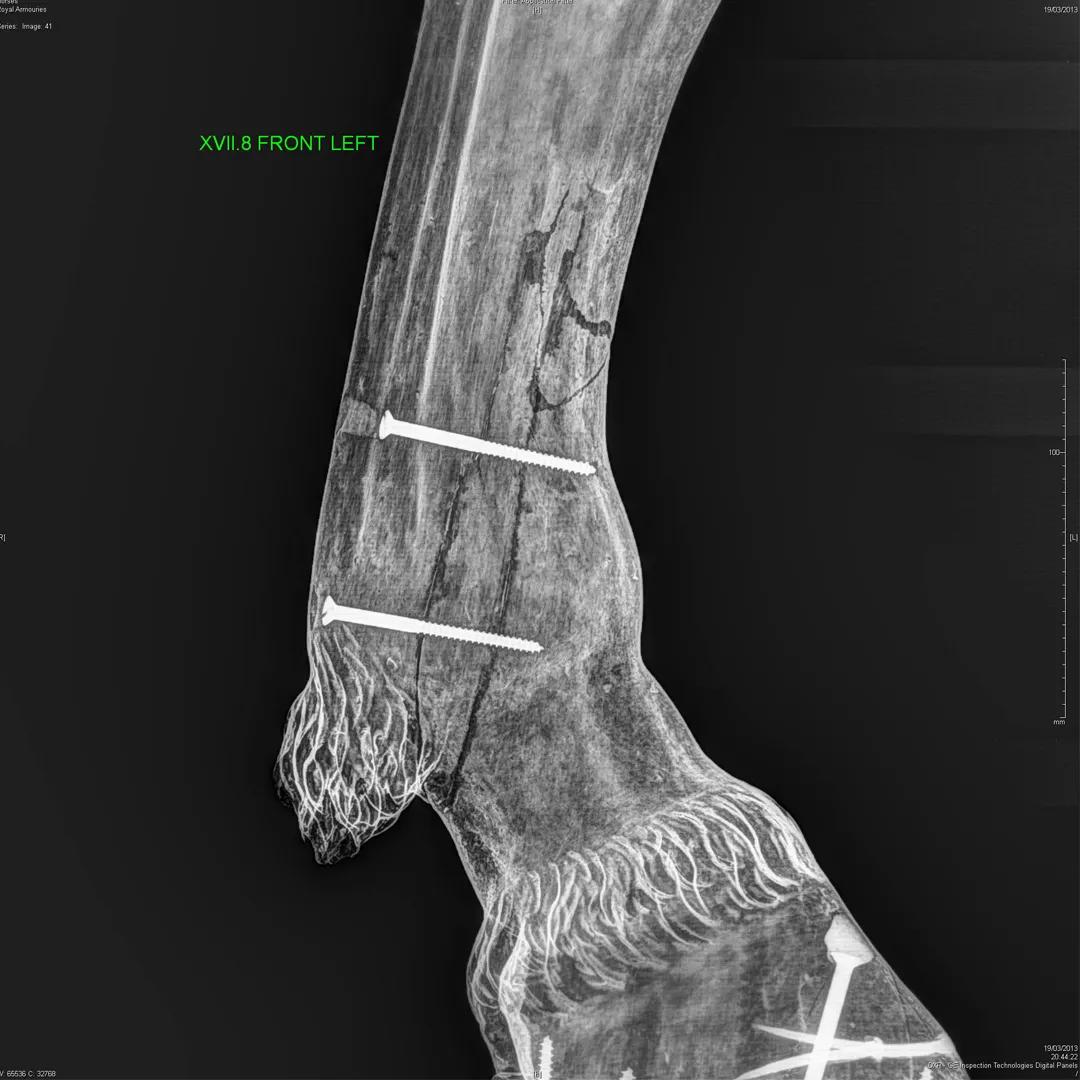
In 2011 it was decided to re-display the ‘Line’. New research was undertaken by the curators into the principal objects, manuscripts, and printed accounts of the historic displays. During 2012 the 17th century wooden horses and some heads formerly used in the armoured figures underwent scientific testing. This included paint analysis, tree ring analysis, examination by fibre-optic cameras, and X-rays.
Original documents at The National Archives were also re-examined. The results showed interesting differences in the construction methods and paintwork. It was not possible though to prove definite connections between horses or heads and craftsmen named in the original documents. In early 2013 new exhibition designs for the Line of Kings were approved and the old display closed ready for the new.
The Line of Kings display from 2013 onwards combines old and new features. All the objects have formed part of one or more of the previous Horse Armoury exhibitions at the Tower of London. However, the new representation of this attraction was influenced by factors including new research and conservation considerations. Its predecessors had been more concerned with propaganda and topicality. Only later did they consider scholarship and accuracy.
While certain armours were correctly attributed to their owners even in the 17th century most were not. Today’s exhibition shows how careful study in the 19th century began to accurately identify objects that had once been labelled as the armours of ‘William the Conqueror’, ‘John of Gaunt’ or a present from ‘the Great Mogul’.
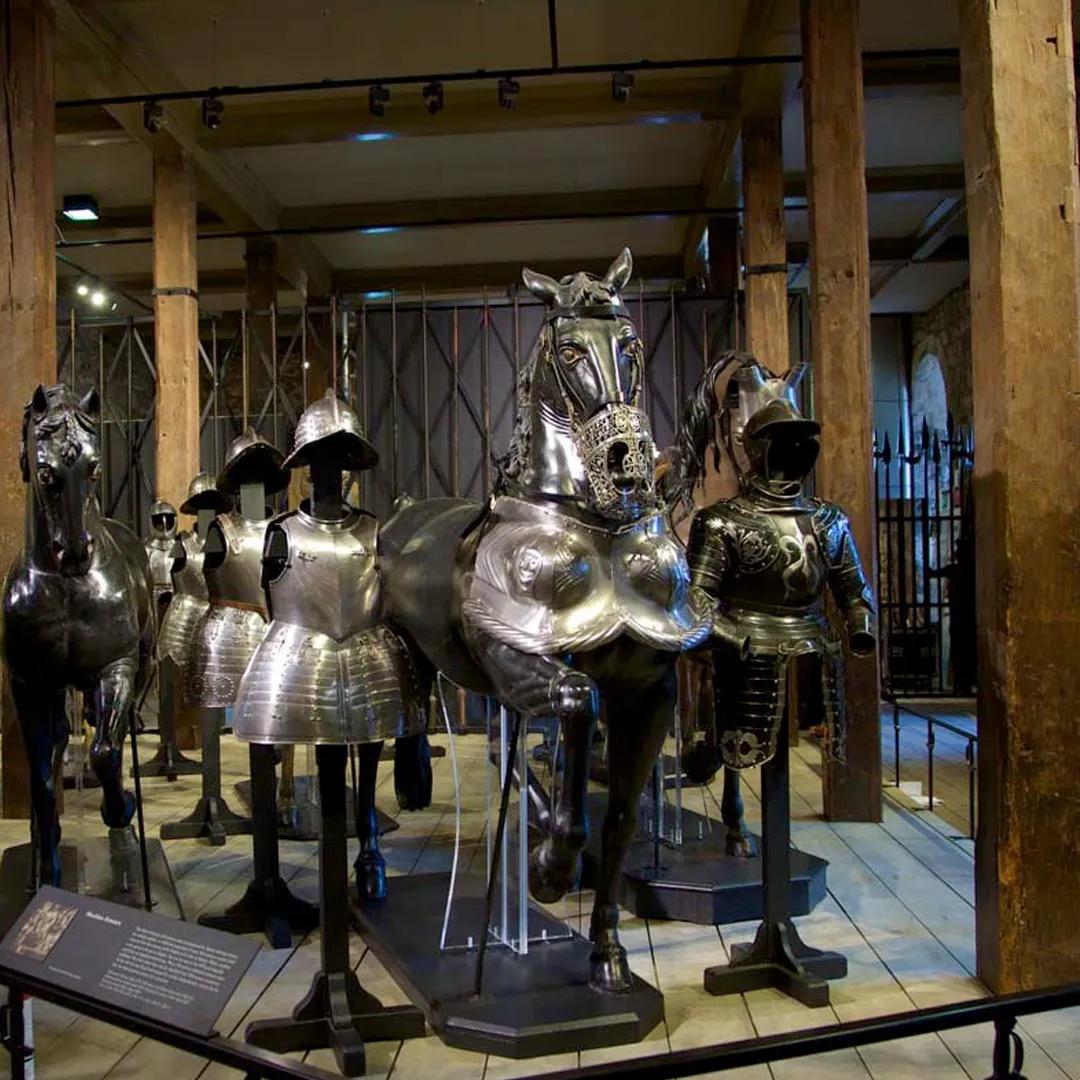
On a busy day today more people visit the display than all of those who saw the Horse Armoury in a whole year during the 18th century. Today’s exhibition has to cope with visitors who move through the gallery by themselves without the benefit of a guide. Furthermore, the objects and our attitudes towards them have changed. The Line of Kings was originally planned to be a spectacular display. Each wooden horse was ‘ridden’ by a king in armour. That is no longer possible because some horses are unable to support the extra weight. The armours are displayed inside showcases instead.
These differences were recognised as opportunities rather than problems. Rather than trying to recreate a display from the past curators and designers produced something new. The project team presented visitors with the idea that they are following in the footsteps of millions of others. Throughout the gallery information panels and labels include drawings, prints and photographs of previous versions of the Line. Published descriptions by visitors from previous centuries who had seen the Line of Kings at the Tower are also featured.
The Line of Kings occupies the entrance floor of the White Tower and brings together the horses, carved heads and the royal armours. The horses and heads are also given equal prominence with arms and armour. In the past the horses and heads were regarded as props that had been designed to make the royal armours look more impressive. Visitors today though can see the horses from a variety of angles. Some carry armours, some just wear horse armour and others stand on their own.
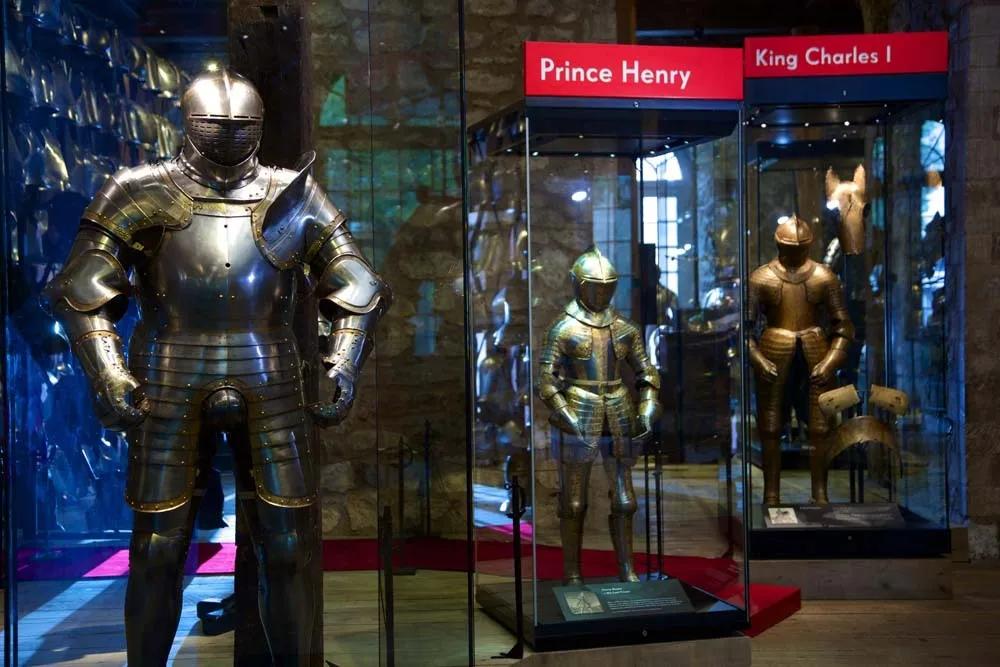
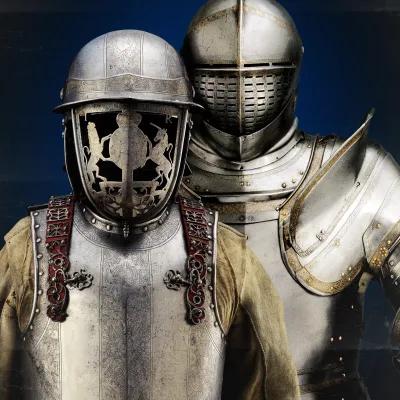
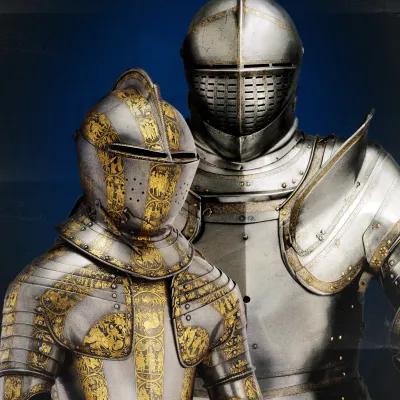
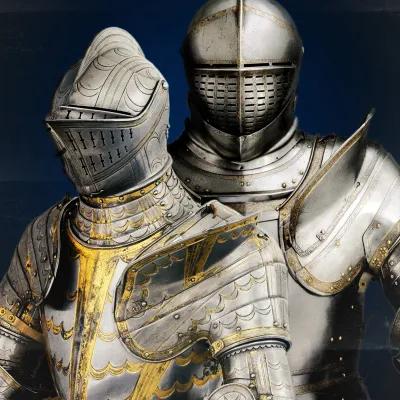
The Line of Kings is displayed in the worlds oldest museum, where visitors have admired the arms and armour of English and British monarchs for centuries. From suits of armour designed for young princes to chest plates engraved with declarations of love and union, the Line of Kings is a fascinating look into not only strength of arms but the projection of power etched into metal. The Line of Kings is currently located in the White Tower. Admission is free to visitors with their Tower of London ticket.
Join the conversation