The Line of Kings

1547 - 1685

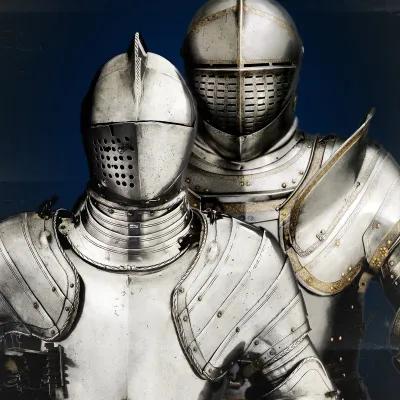
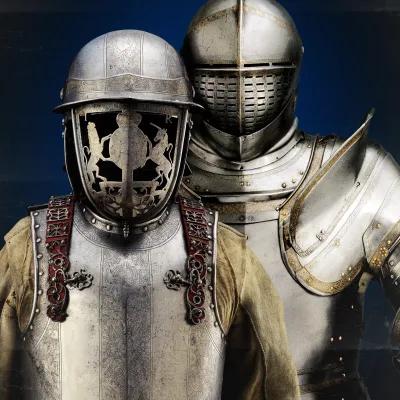
A colour photo of a row of high medieval armour under purple and warm lighting against a stone wall

For about 400 years, visitors have come to the Tower of London to see the world's oldest tourist attraction - The Line of Kings. This attraction is a remarkable display of armours worn by kings and princes of England. The collection has survived revolutions, war, and changes by both curators and monarchs. Today the Line of Kings is displayed on the ground floor of the White Tower for all to enjoy. Yet the display was not always meant to be seen by members of the public. Join us for part 1 of this 5 part series exploring the story of this fascinating and unique attraction at the Tower of London. 

0
No votes yet
Login or register to rate this

The Horse Armoury

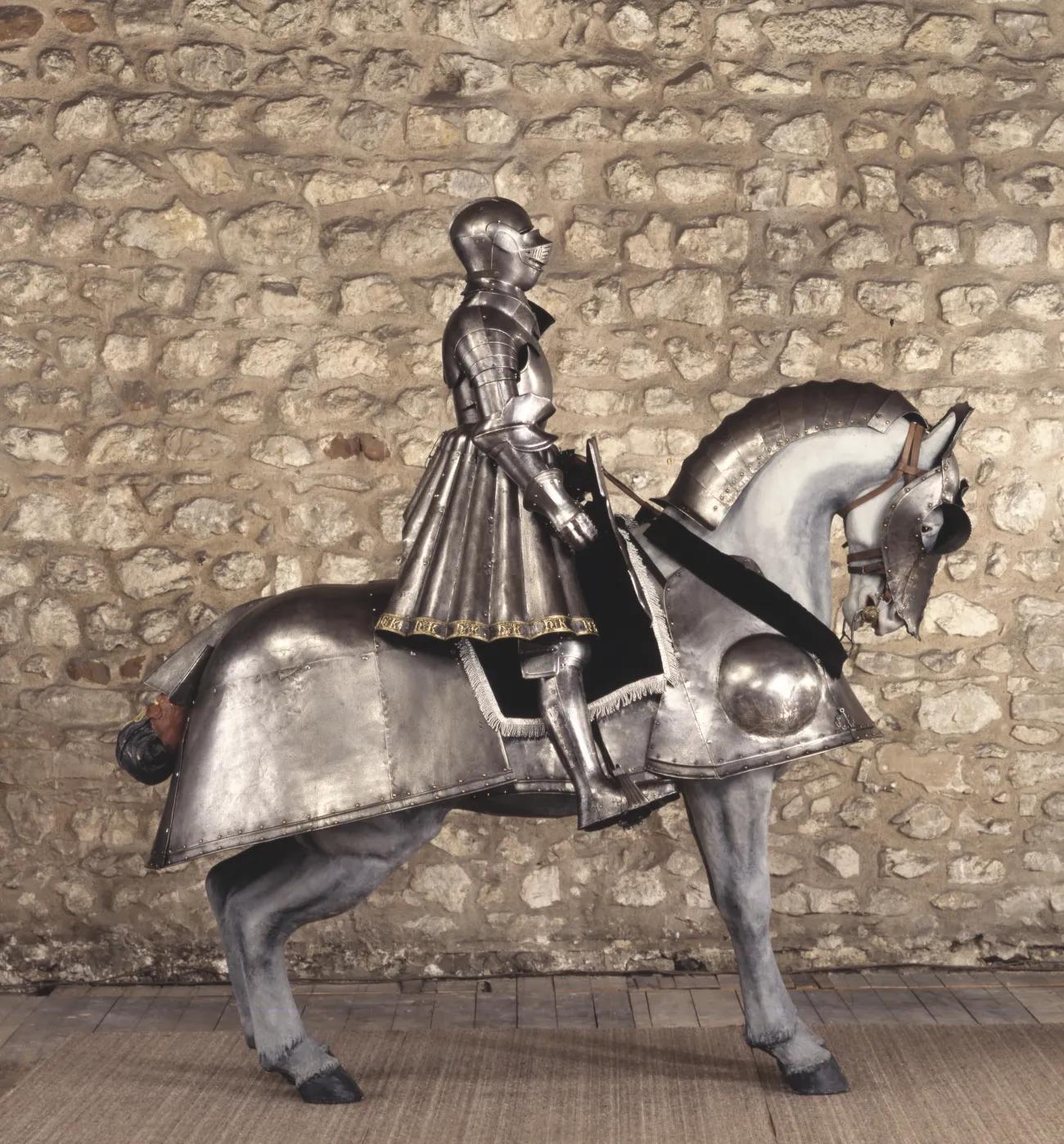
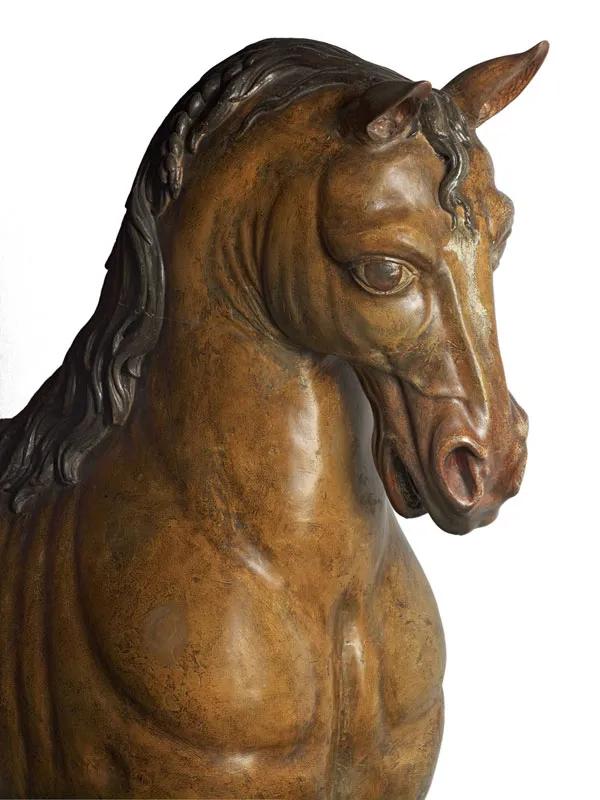
The Line of Kings is a stunning parade of royal armour first created in the last quarter of the 17th century. Mannequins wearing gleaming plate armour sit on top of wooden horses, giving visitors a vivid impression of the Tower's past. The collection is currently on display in the White Tower, but the inspiration for the Line of Kings can be found upriver in Greenwich, London.

A royal palace existed in Greenwich from the 15th century up until the 17th century. Inventories taken of Greenwich Palace storerooms under Henry VIII indicate that wooden horse mannequins existed there by at least 1547. These would have armour mounted on them. By 1629, there were twelve horses recorded in an inventory of objects at Greenwich Palace.
Yet England and Scotland would not remain peaceful. In 1642, the English Civil War broke out between Parliament under Sir Thomas Fairfax and John Pym and the Royalists under Charles I. The country tore itself apart. After a series of devastating defeats, the king surrendered himself in May 1646. The Royalist cause lived on through his son, but Parliament decided to go in a different direction. The Monarchy was overthrown and Charles I was executed in January 1649.

A suit of steel armour with gold edging sat atop a horse mannequin with plate armour
This suit of armour was made in Greenwich in 1515 for the marriage of Henry VIII and Katherine of Aragon. The armour is engraved with personal symbols of the Tudors, such as a portcullis, and the royal family of Aragon, such as a sheaf of arrows. II.5.

A Line Without Kings

A large octagonal room with rows of armour and weapons lining the walls
The Hall of Steel at the Royal Armouries in Leeds holds 2,500 objects and is designed to show how items from the collection would have been displayed at the Tower of London in the 17th century.

For eleven years, England became a republic known as the Commonwealth of England. For a country so recently at war with its own monarchy, it is unlikely that the Tower of London had a display of royal armour. Curators do believe however that many of the essential ingredients of the Line of Kings were brought from Greenwich to the Tower. This was part of a re-organisation of the national armoury.

On 5th April 1650, George Payley, Surveyor of the Ordnance, recorded the storehouse at Greenwich Palace included:

Wooden horses with Statues of Men mounted on them, most of them armed with equipage for Horse.

In 1650-51, the Ordnance officers decided that Edward Annesley should move the old armour from Greenwich Palace to the Tower. Some historians suggest that the wooden horses may also have been brought to London at that time, although no surviving records confirm this. If that was not the case, then those at Greenwich may have been disposed of and a new set made for the Tower. No evidence has been found which proves which of these explanations is correct. There are also no known records of wooden horses at the Tower before 1652.

On 25th March 1652, a young Dutch visitor called Lodewijck Huygens visited the displays in the Old Ordnance Storehouses while looking around the Tower. Huygens wrote about the Armouries in his diary, saying there was enough armour stored to equip 10,000 men. This was in addition to:

...two suits of armour worn by Henry VII and two worn by Henry VIII themselves; they were not very costly though. Another remarkable suit of armour here belonged to John of Gaunt, a renowned warrior of a few hundred years ago, who had been more than a head taller than any person of our time...

Some of Henry VIII's armours have survived to the modern day and are still on display at the Tower of London and the Royal Armouries Museum in Leeds. While many of his harnesses were made to impress with the splendour of their design, others were more practical. Henry VIII's foot combat armour, uniquely, was made for full body protection. Find out more about this astonishing example of armour engineering.
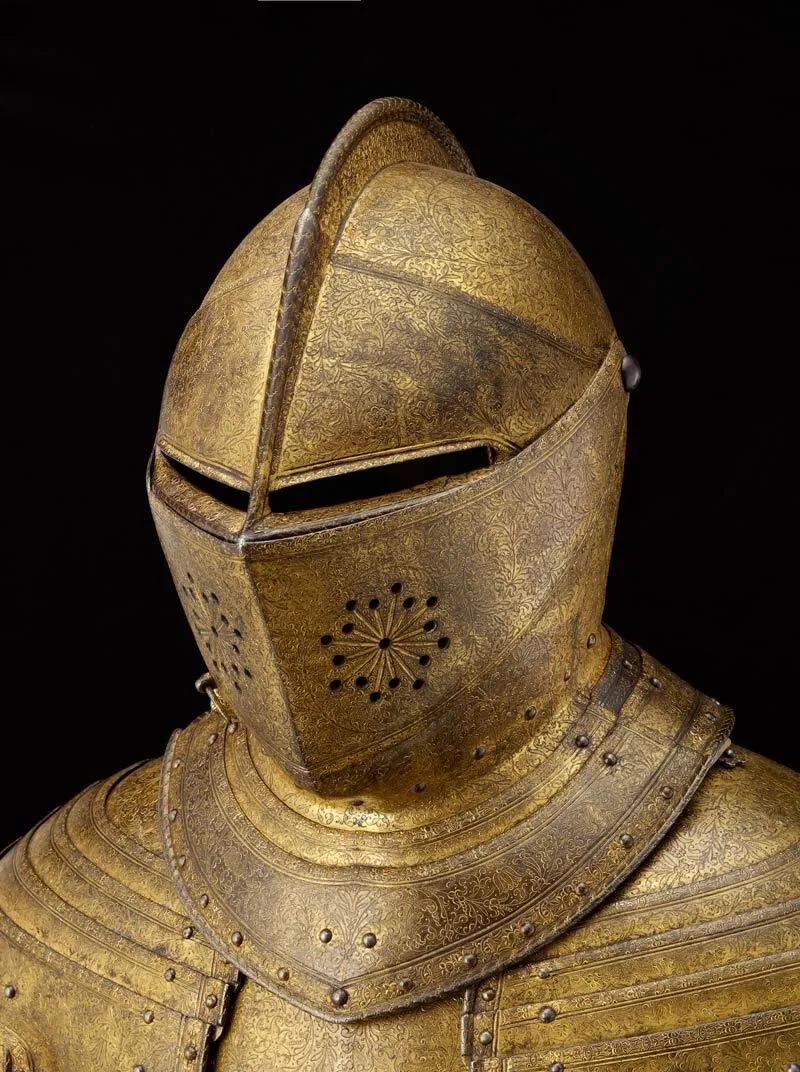
A steel coloured metal helmet that encases the head. The helmet has pierced breathing holes but no sight holes of opening to allow the user to see. The background is entirely black.
This helmet is also known as the 'Blind Bascinet' as it has nowhere for the wearer to see. In the Inventory of 1660, it was believed to have been owned by John of Gaunt. It is now associated with Henry VIII. Great Bascinet, England, about 1510. IV.2.

Timeline of British History - 1547-1685

1547 - 1553
A sepia tone etching of a young boy in a wide brimmed hat with a large feather drooped over one side
Reign of Edward VI
1558
A wooden head carved in the likeness of a woman with reddish hair, red cheeks and lips, and a ruff around the neck
Elizabeth I claims the throne
1588
A black and white engraving of a ship battle, showing tens of sailors firing onto the wooden deck of another ship
The Spanish Armada
1603
A sepia tone engraving of a bearded man in a ruff with high mid-length hair.
James VI becomes James I
November 1605
A black and white illustration of heads on poles
The Gunpowder Plot
1607
Two soldiers wearing steel breastplates and carrying muskets stand guard outside a thatched house
Jamestown Founded
1625
An illustration of an engraving featuring two male figures in profile and one facing the viewer
Charles I crowned
1642
A black and white illustration of a man on a horse looking out over a collection of soldiers in armour and carrying pikes.
English Civil War
1649
An engraving of an execution outside a large manor house surrounded by a large crowd
Execution of Charles I
1649 - 1659
A darkened portrait of a moustached man in armour
The Interregnum
1660
A portrait of a man in a long flowing wig, a thin moustache, and a metal breastplate.
The Restoration
September 1664
A sepia tone illustration showing men in half armour on horseback riding through a walled city gate.
The Capture of New Amsterdam
1665
A black and white book cover recounting the Great Plague of London in 1665
The Great Plague of London
1665 - 67
A colour painting of wooden masted ships being burned on a river, with men carrying muskets landing on the riverbank
The Second Anglo-Dutch War
1666
A black and white engraving of a street map with descriptive text on the lower third
Great Fire of London
1672 - 74
A sepia tone engraving of a naval battle with wooden ships engaging each other with cannon
The Third Anglo-Dutch War
1675
A colour photo of a red brick building with white stone decorations and a red ball on top
Greenwich Observatory Founded
1547 - 1553
Reign of Edward VI

Edward VI was crowned king in 1547 at the age of nine after the death of his father, Henry VIII. A sickly child, Edward was nonetheless an enthusiastic Protestant who continued the Reformation of the English church began by his father. In 1553, Edward developed tuberculosis and died, leaving behind a power struggle that saw his half-sister Mary inherit the throne.

A sepia tone etching of a young boy in a wide brimmed hat with a large feather drooped over one side
Edward VI by James Sangster, England, 1864. Based on portrait by Holbein, England, 1568.
Close
1558
Elizabeth I claims the throne

With the death of Mary Tudor, her half-sister Elizabeth claims the throne. Elizabeth's reign was marked by stability and a flourishing arts scene. She helped to establish the 39 Articles which eased some of the religious strife caused by the break with Roman Catholicism. Yet Elizabeth also continued a hostile policy towards Ireland, and she dealt harshly with those thought to oppose her, including her own cousin, Mary, Queen of Scots. 

A wooden head carved in the likeness of a woman with reddish hair, red cheeks and lips, and a ruff around the neck
Carved wooden head of Elizabeth I. Sculpted for the Line of Kings. England, 18th Century.
Close
1588
The Spanish Armada

Since the death of Mary Tudor, relations had soured between England and Spain. Philip II, Mary's former husband, supported attempts to overthrow Elizabeth and have her replaced with a Catholic monarch. Elizabeth, by contrast, supported the Dutch in their fight for independence from Spain. In May 1588, Philip resolved to conquer England and sent a great fleet with over 20,000 men for the purpose. Due to a series of English victories in the Channel and a large storm, the Armada was scattered and returned to Spain with under half the ships that had set sail.

A black and white engraving of a ship battle, showing tens of sailors firing onto the wooden deck of another ship
Engagement of the Spanish Armada by the English, Illustrated London News, July 14th 1888-43
Close
1603
James VI becomes James I

In 1603, the 69-year-old Elizabeth I died at Richmond Palace. James VI of Scotland, son of her cousin, Mary, Queen of Scots, was named her successor and became James I of England. James was religiously tolerant for the time, but was a believer in witchcraft and personally oversaw the persecution of women accused of being witches in Scotland. His ascension to the English throne united the monarchies of England and Scotland but both Parliaments refused to unite politically or legally. 

A sepia tone engraving of a bearded man in a ruff with high mid-length hair.
James I by James Sangster, London, 1864.
Close
November 1605
The Gunpowder Plot

In November 1605, Guy Fawkes was found with 36 barrels of gunpowder in a basement underneath the Houses of Parliament. The intention had been to start a pro-Catholic coup by assassinating the king, his heirs, and most of Parliament. Fawkes was arrested and his co-conspirators fled. Many of the would-be assassins, including the ringleader Robert Catesby, were tracked down to a manor in Staffordshire and either arrested or shot. Fawkes and 8 other men were hanged, drawn, and quartered in January 1606. 

A black and white illustration of heads on poles
Engraving of the heads of the Gunpowder Plot conspirator. Geschichtsblatter, 17th century
Close
1607
Jamestown Founded

The English colony of Jamestown is founded in Virginia. It is the first permanent English colony in North America. A previous settlement in Roanoke, North Carolina, in the late 16th century is beset by problems and deserted. 

Two soldiers wearing steel breastplates and carrying muskets stand guard outside a thatched house
Two reenactors standing on guard at Jamestown, Virginia. Photograph by Carol M. Highsmith, courtesy of US LoC.
Close
1625
Charles I crowned

Charles I, second son of James I, is crowned King of England. According to observers, Charles was a shy and reserved person who nevertheless believed in the divine right of kings. A series of disastrous wars against Spain, France, and Scotland soured Charles' relationship with Parliament as well as his authoritarian rule. Charles fathered five children who reached adulthood, two of whom would become king. 

An illustration of an engraving featuring two male figures in profile and one facing the viewer
Charles I by James Sangster, England, 1864. Based on portrait by van Dyke, England, 1636.
Close
1642
English Civil War

The English Civil War, sometimes known as the British Civil War or the War of the Three Kingdoms, was a conflict between the Royalists under Charles I and the English Parliament under Sir Thomas Fairfax and John Pym. From 1642 to 1644, the two sides held a stalemate. This was until the Battle of Marston Moor in July 1644 when a cavalry charge by a troop under Oliver Cromwell helped defeat a large Royalist army. The war also led to the creation of the New Model Army, England's first standardised army. Charles would eventually surrender to a Scottish army at Newark in 1646. 

A black and white illustration of a man on a horse looking out over a collection of soldiers in armour and carrying pikes.
Cromwell at Marston Moor, Ernest Crofts, London, Late 19th Century
Close
1649
Execution of Charles I

After his surrender, Scotland ransomed Charles back to the English Parliament in 1647. Despite this, Charles continued to enjoy support throughout Scotland and England. Uprisings in the south east of England and an invasion from Scotland led to a second Civil War, which ended with the defeat of the Royalists at the Battle of Preston in 1648. Charles was increasingly seen as a tyrant, and after a Parliamentary purge led by Oliver Cromwell and Thomas Pride, the king was tried for treason. Charles I was found guilty and executed on 30th January 1649.

An engraving of an execution outside a large manor house surrounded by a large crowd
Execution of King Charles I, C.R.V.N, Netherlands, 1649
Close
1649 - 1659
The Interregnum

The Interregnum period refers to the time between the execution of Charles I and the official crowning of Charles II. During this period, England became a republic known as the Commonwealth ruled at first by Parliament and then by Oliver Cromwell as the Lord Protector. The Interregnum was a time of unrest as Royalist supporters in Scotland and Ireland were brutally repressed by Cromwell. The First Anglo-Dutch War (1652-54) also broke out as the two nations wrestled for control of trading ports across the globe. When Oliver Cromwell died in 1658, his son Richard was made Lord Protector. Richard however was not as capable as his father and the Commonwealth was dissolved between 1659-1660.

A darkened portrait of a moustached man in armour
Oliver Cromwell, England, mid-17th century
Close
1660
The Restoration

Following the Battle of Worcester in 1651, Charles II lived in exile in France. On the collapse of the Commonwealth, Charles was invited back to England as king in 1660 and crowned the following year. During his reign, England witnessed a revival of art, theatre, and literature that had been suppressed under the Puritanical Commonwealth. The sciences also blossomed as the Royal Society, the oldest scientific academy in the world, was established in 1660.

A portrait of a man in a long flowing wig, a thin moustache, and a metal breastplate.
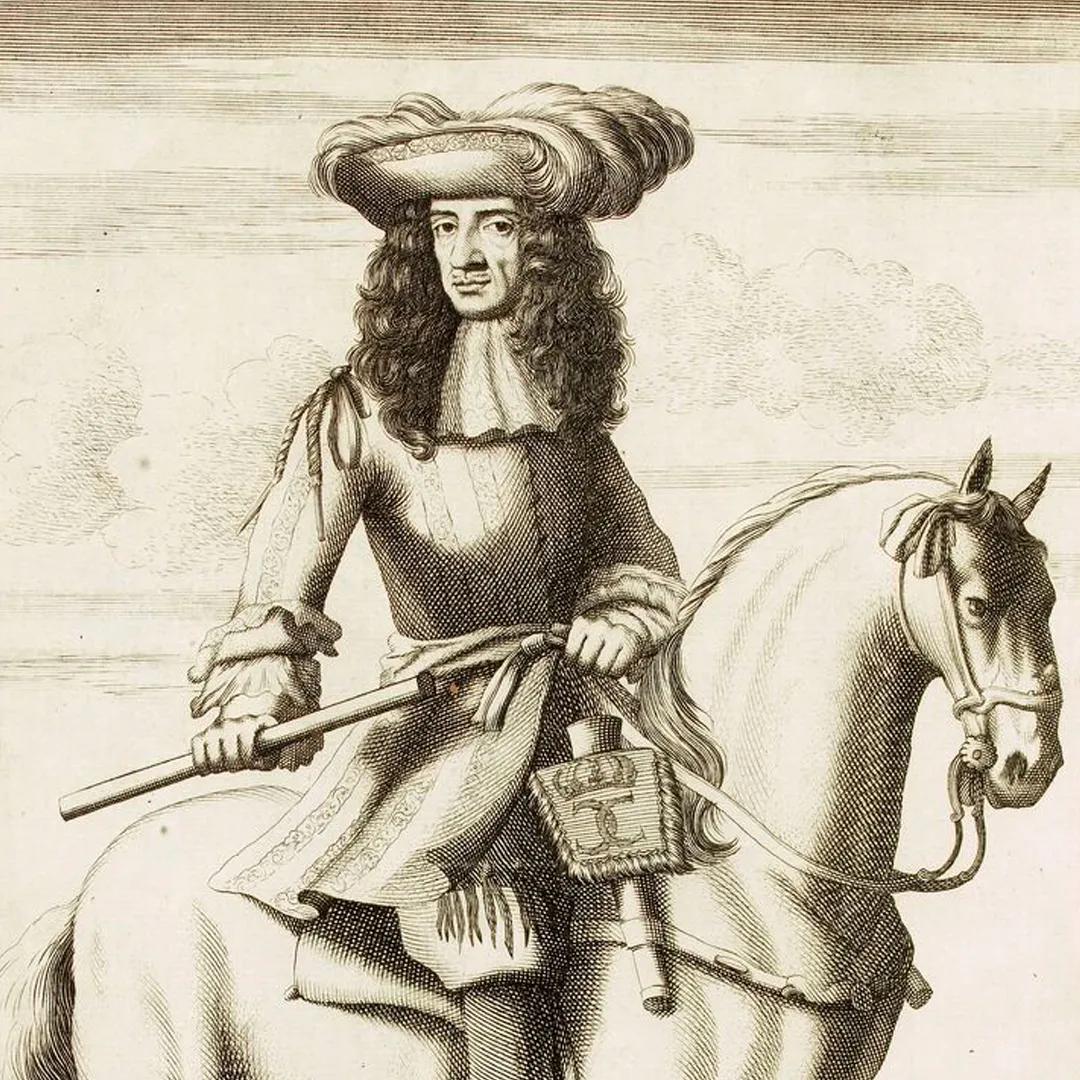
Charles II on horseback. From 'A Treatise of the art of war', Roger, Earl of Orrery, London, 1677.
Close
September 1664
The Capture of New Amsterdam

England and the United Provinces, otherwise known as The Netherlands, had been at peace since the end of the First Anglo-Dutch War in 1654. With the Restoration, Charles II was keen to expand England's trading interests - largely at the expense of the Dutch. In 1664, Richard Nicholls was dispatched to gain control of the land between Maine and Delaware, which at that time was largely under the control of the Dutch. In August, Nicholls arrived off the coast of New England and threatened the colony of New Amsterdam. In September, to avoid bloodshed, the Dutch administrator Peter Stuyvesant surrendered the town to the English, which was renamed New York.

A sepia tone illustration showing men in half armour on horseback riding through a walled city gate.
The Surrender of New Amsterdam. Harris, Charles X. New York, 1908.
Close
1665
The Great Plague of London

The Great Plague of London was the worst outbreak of Bubonic Plague since the Black Death of 1348. Over 68,000 people lost their lives over the course of 12 months. In one week in September, over 7,000 Londoners died. The wealthy fled to the countryside, while the dead were carted off to communal plague pits just outside the old city. The nursery rhyme "Ring-a-ring-a-roses" is often, incorrectly, believed to be about the 1665 plague.

A black and white book cover recounting the Great Plague of London in 1665
The title page of Daniel Dafoe's account of the Great Plague of London. Printed by Henry Miller, Philadelphia, 1767.
Close
1665 - 67
The Second Anglo-Dutch War

After years of growing tension between England and The Netherlands, the Second Anglo-Dutch War broke out in 1665. Causes include competition for trade, differences in political outlooks, and factionalism in both the court of Charles II and the Dutch republic. Despite an initial English victory at Lowestoft, France entered the war on the side of the Netherlands in 1666, leading to a series of defeats. The most humiliating of these was the Raid on the Medway in June 1667, when the Dutch sailed up the River Medway and destroyed the docked English fleet at Chatham. The war ended with the Treaty of Breda, which largely preserved the status quo in favour of the Dutch.

A colour painting of wooden masted ships being burned on a river, with men carrying muskets landing on the riverbank
The Raid on the Medway. Jan van Leyden, Rijksmuseum, Holland, 1667.
Close
1666
Great Fire of London

On 2nd September 1666, a small spark in a bakery on Pudding Lane in London grew into a blaze that would consume 80% of the city. For 4 days, teams of people with buckets and pumps attempted to keep the fire under control, including reports of Charles II and his brother James. Others took the opportunity to loot abandoned houses and businesses. Eventually, gunpowder was used to destroy buildings and create firebreaks. 100,000 people were left homeless by the fire and buildings that stood for 6 centuries were left in ashes. Remarkably, only six people are recorded as losing their lives. In the aftermath, much of the city, including St. Paul's Cathedral, was rebuilt by Sir Christopher Wren.

A black and white engraving of a street map with descriptive text on the lower third
The plan for rebuilding London proposed by Sir Christopher Wren after the Great Fire. England, 1666.
Close
1672 - 74
The Third Anglo-Dutch War

After the setbacks experienced after the Second Anglo-Dutch War, Charles II signed the secret Treaty of Dover in 1670. In the treaty, England promised to assist the French king Louis XIV in any future invasion of The Netherlands. In 1672, France invaded the Dutch Republic aided by the Royal Navy. The Dutch, led by William of Orange, deliberately flooded large areas of their land, halting the French army. This move also allowed the Dutch navy to prevent further French and English landings along the coast. Many in England felt the war was unjust and in 1674, Charles made peace.

A sepia tone engraving of a naval battle with wooden ships engaging each other with cannon
The Battle of Texel during the Third Anglo-Dutch War. F. Muller, Rijksmuseum, Amsterdam, 1863-1882.
Close
1675
Greenwich Observatory Founded

As England's colonial ambitions developed, the need for accurate naval charts became more important. As well as cartography, trading companies and captains needed to know exactly where their ships were. This was easy when it came to the latitude on a north to south line, but harder when it came to the longitude on an east to west line. Charles II aimed to solve this problem by founding a Royal Observatory in Greenwich Park. It was due to the efforts of generations of scientists at Greenwich that the Observatory became the home of the Prime Meridian - the place where by all degrees of longitude are measured.

A colour photo of a red brick building with white stone decorations and a red ball on top
Greenwich Observatory. Photograph by Tilman2007 via Wikicommons. 2006.
Close

The Restoration

An engraving of a man with long, curled hair and small beard clad in a steel breastplate atop a horse
The Tower of London was the traditional starting point for coronation processions to Westminster Abbey. Diarist Samuel Pepys said of Charles II's procession, "It is impossible to relate the glory of this day!" Portrait of Charles II. Earl of Orrery. 1677

The Commonwealth was not to be permanent. The Parliamentarian and architect of the Commonwealth, Oliver Cromwell, died in 1658. Richard Cromwell was appointed Lord Protector but proved less able than his father and resigned in 1659. With the collapse of the Commonwealth, Charles II was invited to return to England and restore the monarchy.

This was known as The Restoration, and it introduced a revival in the arts and in scientific discoveries. Celebrations which had been banned under the Puritan Commonwealth, such as Christmas, were reinstated. At the same time, Charles II also made an effort to retrieve royal property which had been sold off or disposed of. This included arms and armour from the armouries.

On 4th August 1660, Charles II visited the Tower of London where he ate a meal with Sir John Robinson, the Constable of the Tower. The king requested an audit of all arms, armour, and tools that were at the Tower and other royal sites. Two weeks later, William Legge, Master of the Armouries, was given £100 towards the cost of making a list of all the goods belonging to the Office of Armoury.

The report recorded that in the Lieutenant’s Hall at the Tower, there were ten statues of men dressed in armour sitting on wooden horses. These included Henry VII, Edward III, and William the Conqueror. Other prominent figures included Prince Henry Stuart, Charles Brandon, 1st Duke of Suffolk, and the Earl of Leicester.

This is the earliest evidence of all the figures making up a Horse Armoury at the Tower. However, the inventory raises a problem. Records suggest that The Lieutenant's Hall did not have a high enough ceiling at this date to have housed figures on horseback. Could there have been an error in the inventory? Or is it possible that at this time the display was incomplete?

A Tourist Attraction

One thing that the inventory makes very clear is that in the 1660s, the display was made up of a mixture of monarchs and noblemen – hardly a ‘Line of Kings’! There’s no evidence that the display even had that name yet.

By 1660, the Tower of London was no longer used as a royal palace but was still an important crown possession. The Tower held several functions, including as a fortress, a prison, an armoury, and the Mint. Yet over the next 25 years, the Tower took on a new, unique function: London’s must-see tourist attraction.

Visitors could enjoy the Royal Menagerie, the Crown Jewels, and the Tower Armouries. One such visitor was Willem Schellinks, a Dutch artist who had only arrived in London the previous day. On 15th August 1661, Schellinks took a guided tour of the Tower and described:

...the body armour of several Kings and their horses’ armour are lined up in a row, of very ancient and uncommon fashion, but all well looked after and kept polished. According to their keeper, there is the armour of Prince Henry, King Henry VIII, King Henry VII, Edward III, Charles I, Edward IV, Henry VI, the Duke of Gloucester, Charles Brandon, Duke of Suffolk, and that of William the Conqueror.

It is likely that Schellinks made a mistake and wrote ‘Duke of Gloucester’ when he was shown the figure of the Earl of Leicester. If that is the case, then his list exactly matches the 1660 inventory.
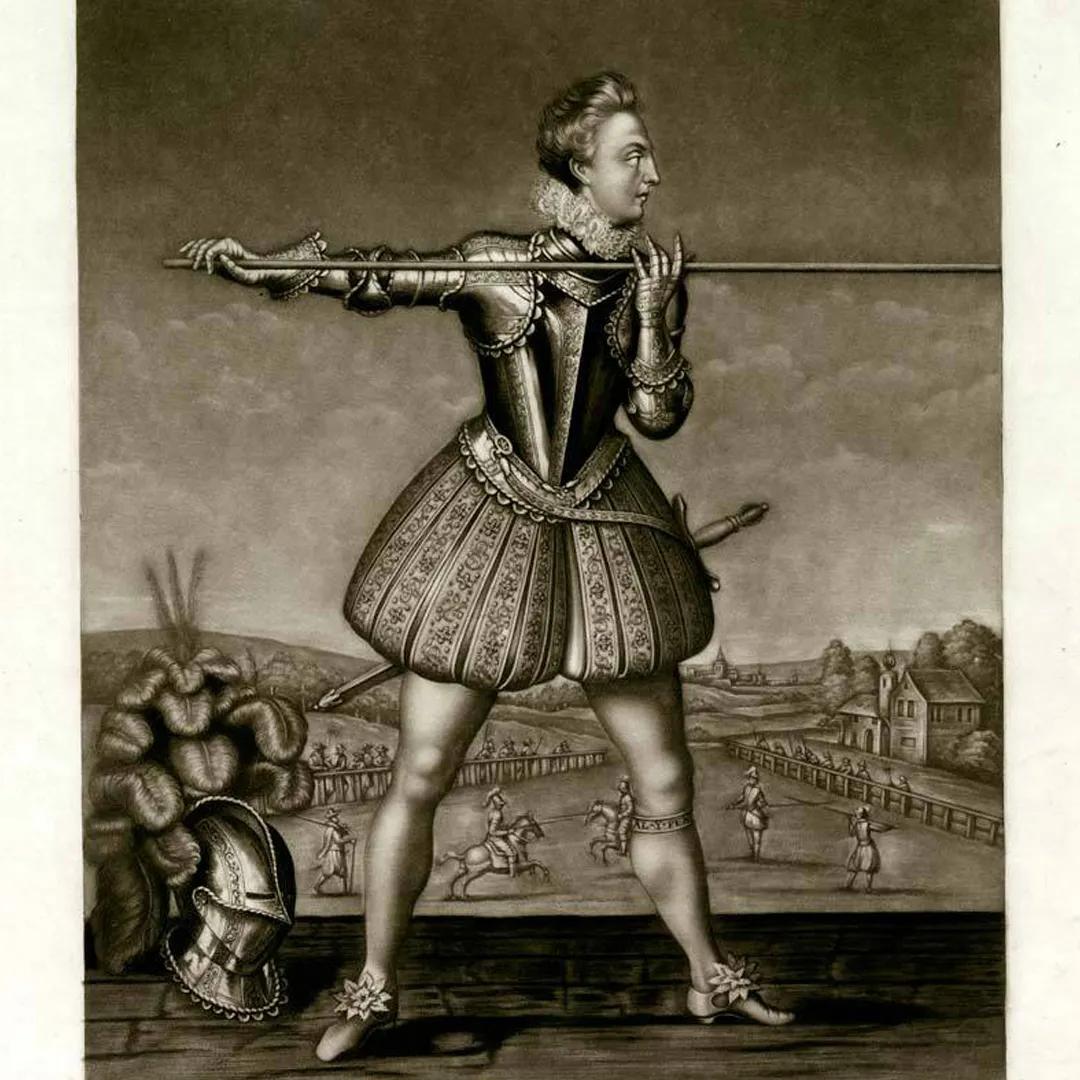
Engraving of a man in armour levelling a pike
Prince Henry Stuart was the eldest son of James I and heir to the throne until his untimely death in 1612. By 1660, his armour formed part of the Line of Kings. Engraving based on earlier work by Simon de Passe, 1616 - 1622.

First Impressions

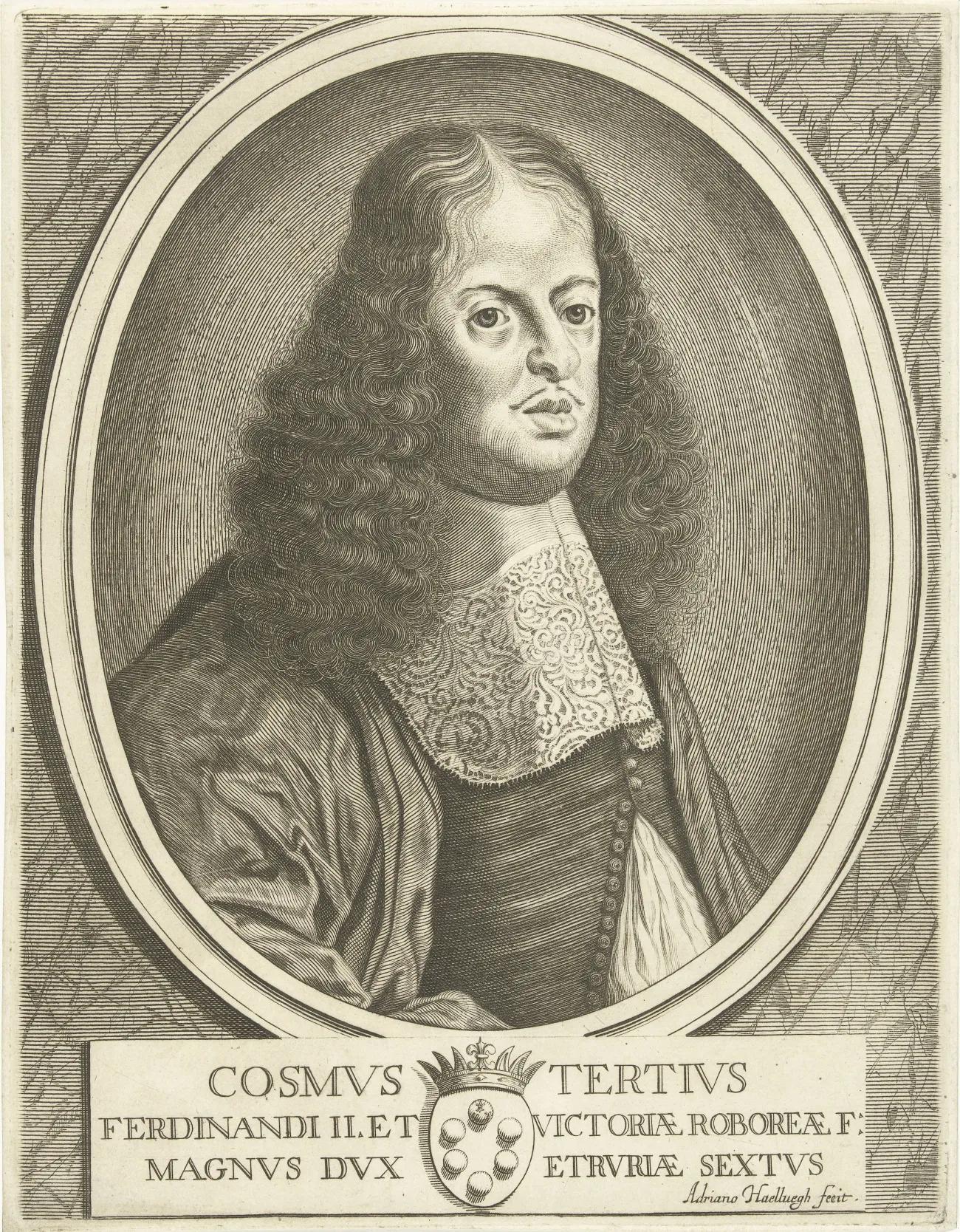
A sepia tone engraving of a man with long curly hair but thinning on top, in 17th century dress, surrounded by a cartouche with his name and family crest emblazoned below.
Cosimo may not have been impressed by the armoury, but his visit to the Tower does record “cannon, two of which… were furbishing up... to be sent as a present to the king of Fez (present day Morocco)”. Cosimo III, Netherlands, 17th century. Rijksmuseum.

Of course, the display was not open to everyone. Only the wealthy could afford to pay the admission fee. During the 1660s, the politician and writer Samuel Pepys was a frequent visitor to the Tower on both business and pleasure. Pepys lived and worked nearby at the Navy Board. In 1666, General Patrick Gordon, recorded in his diary that he spent £1 and 13 shillings visiting the Tower of London; a huge sum for the time.

The Tower also attracted foreign visitors who could appreciate the craftsmanship of British arms and armour. Or not, as the case may be. On 23rd April 1669, Cosimo III, Grand Duke of Tuscany, recorded:

The tower also contains the armoury, in which various sorts of arms are preserved, but they are neither very numerous nor very valuable; among these are some of Henry VIII; of the Duke of Lancaster and of the Earl of Suffolk.

The French mapmaker and traveller, Albert Jouvin de Rochefort, was more impressed. He wrote of his visit in 1672:

Our conductor showed us… some (armour) which had been worn by the different kings of England during their wars; they were all gilded and engraved in the utmost perfection.

By 1675, the Line of Kings was known as the Horse Armoury. Throughout Charles II’s reign, the Horse Armoury was already an important part of the Tower’s display of arms and armour. Inventories of the period list ten mounted figures, but changes to the attraction were on the way.

A new wooden horse was commissioned from the carpenter Thomas Cass in 1669. One wooden horse and two suits of armour were sent to Windsor Castle in 1681. The horses were repainted by Valentine Bayley in 1682-83. Yet the king would not live long enough to see any further developments. Charles II died in February 1685, and the crown passed to his younger brother, James II.

Find out more about the Line of Kings in our online collection
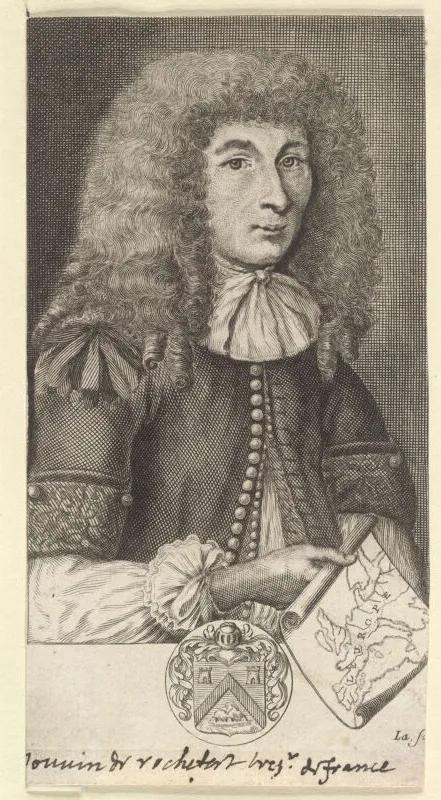
A sepia tone engraving of a man with a pinched face and large, greying wig. In his right hand, he holds a map.
Albert Jouvin de Rochefort was impressed by his visit to the Tower. He records visiting the Armoury which contained arms and armour “capable of raising an army of 100,000 men”. Albert Jouvin de Rochefort, 1700, Austrian National Library.

Far from being a static display, the Line of Kings has undergone several changes to reflect changing political landscapes. In part 2 of this series documenting this remarkable attraction, we explore how the Line was used to cement a change in monarchs and how it grew in popularity to become a must-see display for tourists.
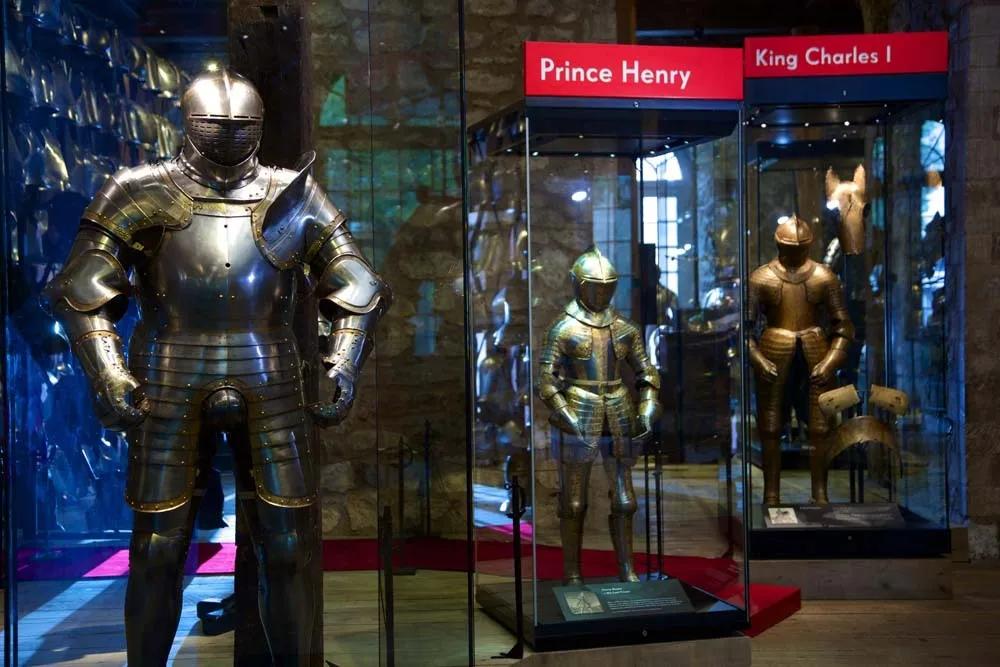
A colour photo of three suits of metal armour in descending rows. All three are held in three glass cases.

Visit the Line of Kings

The Line of Kings is one of the oldest visitor attractions in the world, displaying the arms and armour of monarchs throughout English and British history. From suits of armour designed for young princes to chest plates engraved with declarations of love and union, the Line of Kings is a fascinating look into not only strength of arms but the projection of power etched into metal. The Line of Kings is currently located in the White Tower. Admission is free to visitors with their Tower of London ticket.
Plan your visit to the Tower of London

Comments

Join the conversation

Log in or register to post comments
0 comments