6 minute read
- The Mongols


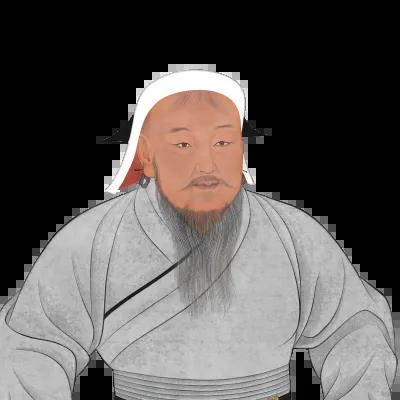
Towards the end of the 13th century, the Mongols had established themselves as the undisputed masters of Asia and the Middle East. Victories over the Koreans, the Bulgarians, and the Song Chinese had seen the Mongol Empire reach its peak. However, a succession crisis in 1260 and rivalries between Genghis Khan’s heirs led to the reorganisation of the empire. The conquests of Genghis, Ogedei, Guyuk, Möngke and Kublai were divided into several khanates. For the next two centuries, these lands would rise, fall, cooperate, and feud with each other.
Here we explore how the once mighty empire of the Mongols fell due to local rebellions, a global pestilence, and personal ambition.



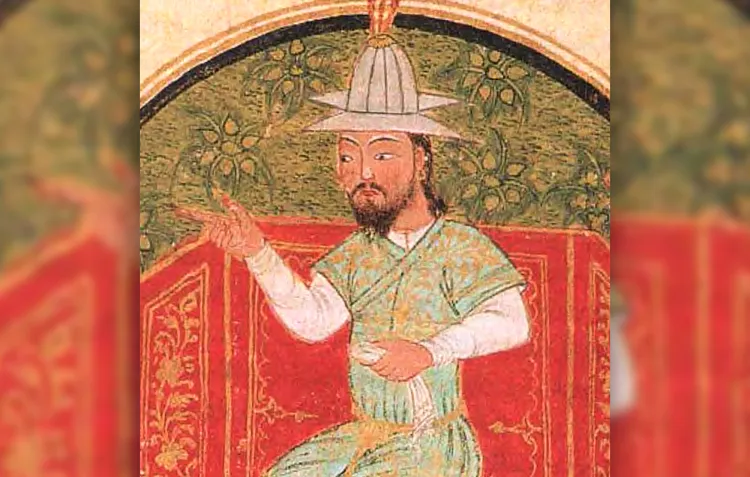


Between 1243 and 1266, different khanates had arisen around powerful members of the Chinggisid dynasty – the Golden Horde, the Ilkhanate, the Chagatai Khanate, and Yuan China. These khanates were initially loyal to the supreme khan based in Central Mongolia, not far from Ogodei’s capital Karakorum. When Mongke Khan, grandson of Genghis Khan, died, two of his brothers began to struggle for his succession.
A fight broke out between the two brothers – Ariq Boke and Kublai. When Kubilai finally defeated Ariq Boke in 1264, the different khanates established their independent nature. Despite their separation, the khans remained connected, politically and by blood, as they grappled with the inherited legacy of Genghis Khan. Yet, the Mongol Empire would never fight unified again.
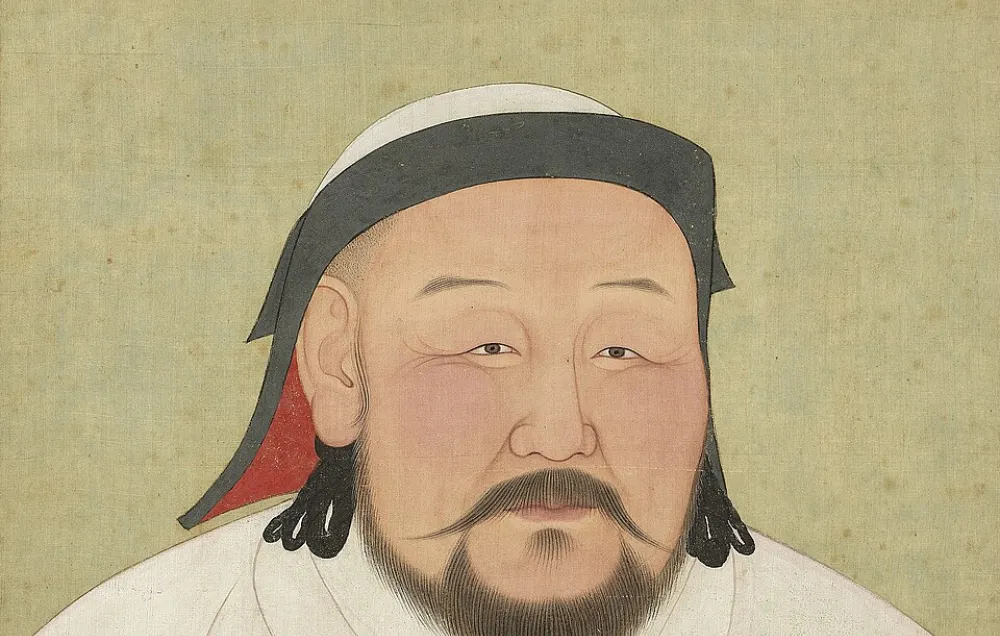
With his position as supreme khan of Northern Jin China secured, Kublai returned to the conquest of the Song empire. A Mongol-Han Chinese army of approximately 100,000 men and 10,000 ships invaded Song lands in 1274 where they inflicted a series of stinging defeats. This ended in the Battle of Yaishan in 1279, when the 7-year-old emperor Zhao Bing was drowned by his own advisors to avoid capture.
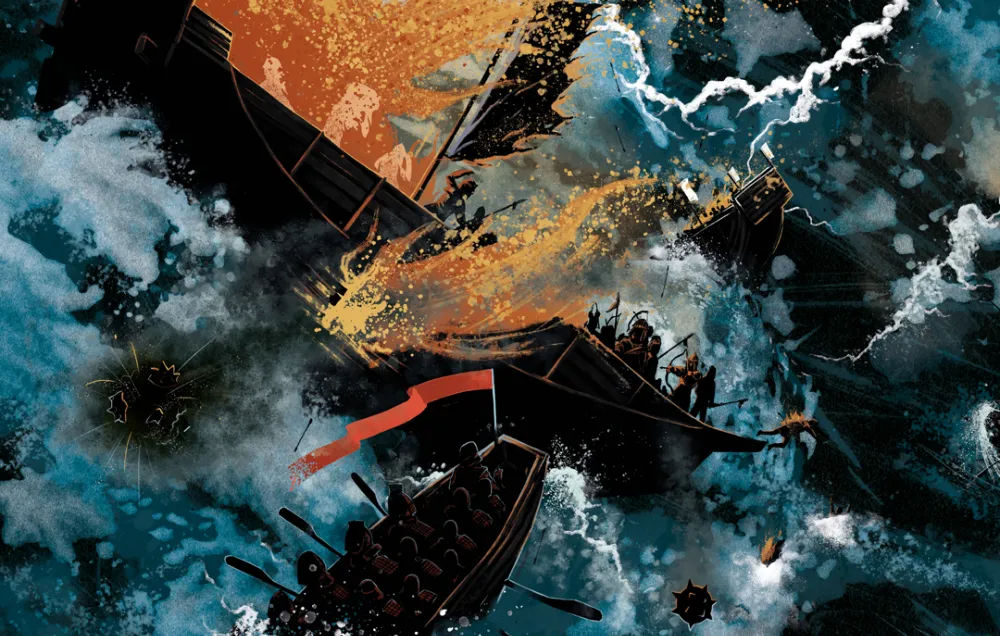
Throughout this time, Japan had continued trading with Song, leading to deteriorating relations with Yuan China. Kubilai launched 2 invasions in 1274 and 1281 to bring the Japanese under Mongol control. Both invasion attempts ended in failure.
The turn of the 14th century saw each khanate in a state of development as they expanded their military and economic power. The Yuan Mongols unsuccessfully invaded Vietnam in 1283, 1285, and 1288, modern-day Indonesia in 1292, and Burma in 1300. The Chagatai Khanate attacked India in 1292 and again in 1328. The Ilkhanate struggled to secure dominance of Syria over the Mamluks of Egypt. Meanwhile, the internal conflict between branches of the Chinggisid dynasty continued.
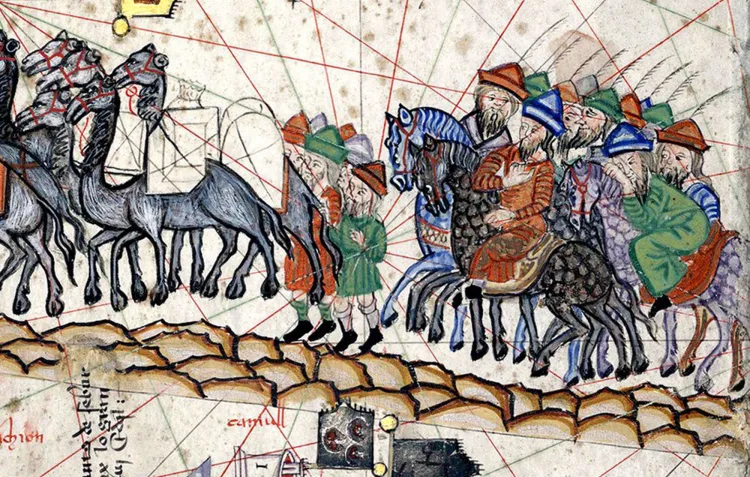
The Yuan Emperor Kublai, son of Tolui and the grandson of Genghis Khan, fought with Qaidu, khan of the Chagatai Khanate, grandson of Tolui’s brother Ogedei and great grandson of Genghis Khan. The fighting however was confined to central Asia, while the rest of the empire enjoyed what is known as the ‘Pax Mongolica’, or Mongolian peace. This is where the Mongol Empire experienced a prolonged period of peace and trade between east and west was at its height.
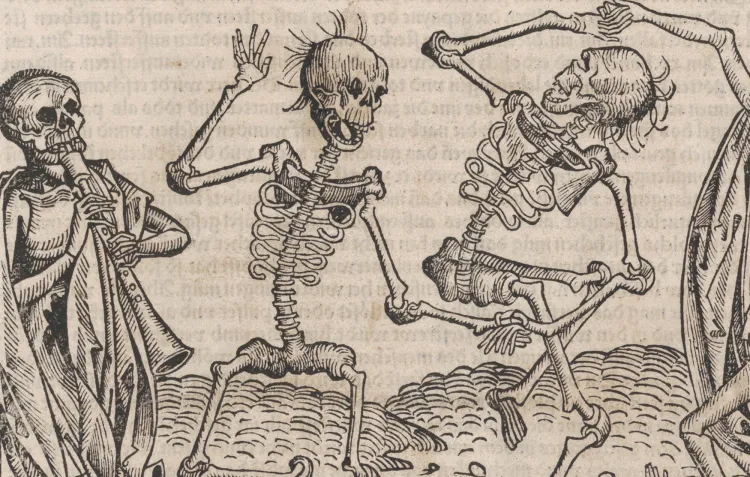
In 1346, the Golden Horde laid siege to the Genoese city of Caffa in Crimea. According to an Italian notary, Gabriele de’ Mussi, a plague broke out in the Mongol camp which left only 1 in 20 soldiers alive. This was the Black Death.
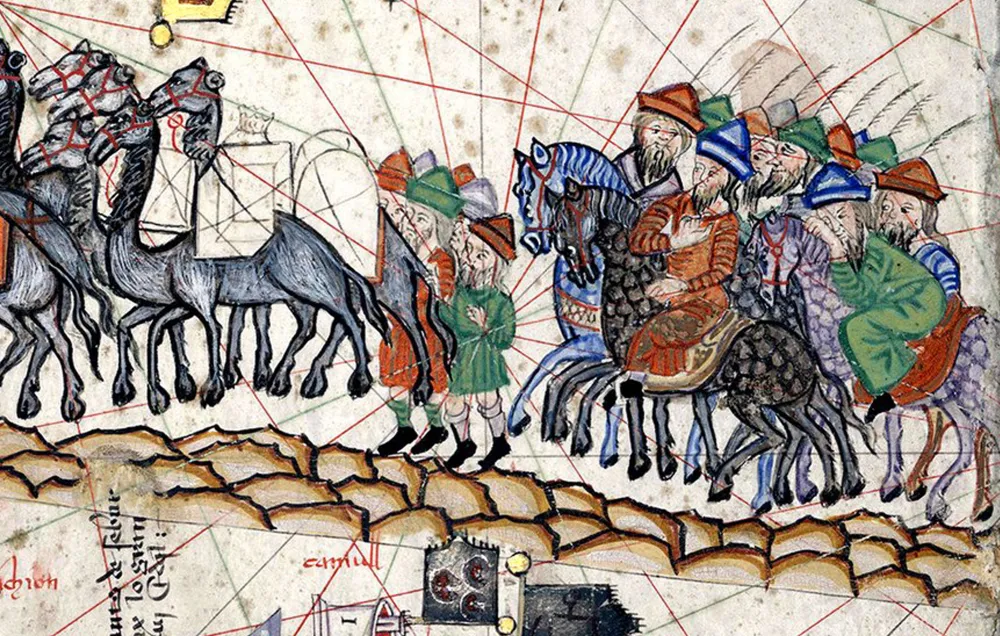
Trade caravans and merchant ships travelling the different routes of the Silk Road carried infected rats and fleas from Asia to the Middle East and Europe. When the Black Death arrived, the population had little immunity to the pestilence. By 1349, the plague had spread from Seville to Oslo, killing between 75 and 200 million people.

The 1350s was a time of great instability among the khanates as each experienced internal and external challenges to their rule. Many of the Khanates had been weakened by the Black Death as trading routes were closed and populations declined. Those who survived looked to capitalise on the changed political landscape. The Ilkhanid ruler Abu Said died in 1335 without an heir, and within 20 years the remnants of the Ilkhanate fell prey to the Golden Horde looking to expand into the Caucasus and Iraq.
Yet by 1357, the Golden Horde itself descended into a series of dynastic struggles. Successive khans were assassinated by their sons and brothers, each hoping to ascend to the throne. This distraction allowed the Russians and Polish Lithuanians under Mongol rule to launch unsuccessful rebellions.

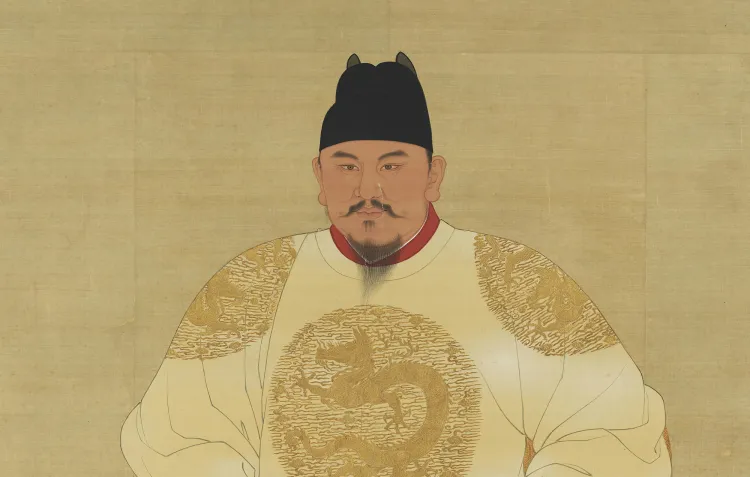
After years of military decline and failed harvests, the Red Turban Rebellion emerged in 1351. The rebels, led by general Zhu Yuanzhang, called for the expulsion of Mongols and allied advisors from the Chinese government. In January 1368, Zhu Yuanzhang declared himself the Hongwu Emperor, the first of the Ming Dynasty.
Later that same year, the key cities of Beijing (also known Khanbaliq) and Shangdu (also known as Xanadu) were captured by the Red Turbans, prompting the Yuan emperor Toghon Temur to flee to Mongol lands to the north. This marked the end of Yuan China as a Mongol province, but the Yuan themselves maintained their power over Mongolia, which became known as the Northern Yuan, until the 17th century.

As Mongol power faded in China, the Chagatai Khanate also experienced a decline. Internal conflicts throughout the first half of the 14th century had split the khanate into two territories, the Chagatayids and Moghulistan. In the 1360s, a Turko-Mongol military leader in the service of the Chagatayids called Timur rose to dominate regional politics. By 1370, Timur had himself installed as Amir of the Chagatai Khanate, claiming to reunite the old Mongol Empire.
Over the next few decades, Timur seized land from both the Golden Horde and former Ilkhanate territories, creating an empire that stretched from India to Turkey. While the Timurid Empire only lasted until the 1500s, the descendants of this Turkic-Mongol dynasty would go on to establish the Mughal Empire in India from the 16th to the 19th century.

In the 1370s and 1380s, as Timur took over the Chagatai Khanate, the Golden Horde underwent an internal struggle for the throne. By the 1370s, one claimant, Toqtamish, emerged as khan of the Golden Horde. At first, Toqtamish and Timur were allies in the victory over Toqtamish’s rivals. However, Timur had since expanded into the Caucasus and threatened trade routes vital to the Golden Horde.
In the mid-1380s, a 20-year war broke out between Toqtamish and Timur in which several cities of the Golden Horde, including Sarai, were sacked. The destruction of Sarai and the rise of the Timurid Empire began to erode Mongol control of vital trade routes between east and west.

In the first half of the 15th century, the Golden Horde decentralised and splintered into new khanates, including the Crimean Tatars. This was due to increasing pressure from external empires and internal factionalism. By the 1460s, vassals such as Moscow began to refuse paying tribute to the Khan.
For Moscow, this led to the Stand on the Ugra River; a tense, months long stand-off in 1480 between Russian and Mongol armies. No battle took place, but the Golden Horde did eventually retreat as other areas of their territory came under attack from the Crimean Tatars.
In the Central Asian steppes, the Kazakh khanate revived the old Golden Horde, but the era of Mongol dominance was over. Successors from Beijing to Moscow would use the legacy of the Mongols to build their own empires.


Join the conversation